
The short answer
If your AC is blowing warm air, short cycling, leaking, freezing up, or making new noises, it needs a diagnosis before the problem grows. We find the actual cause, explain your repair or replacement options, and give you the price for the recommended work before anything starts.
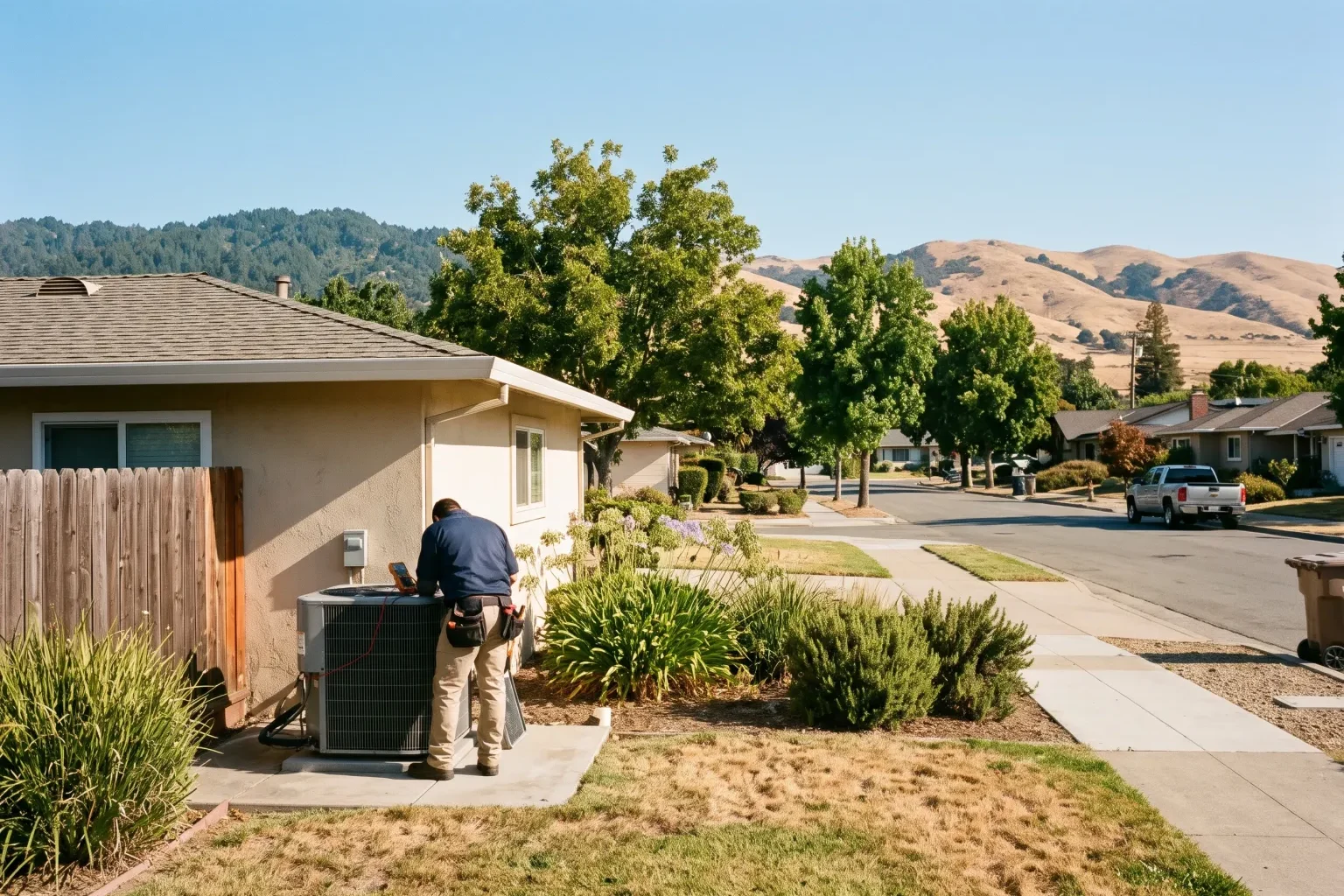
When your air conditioner quits on a hot afternoon, you want a clear answer about what's wrong and what it will take to fix it. NextLevel AC Repair Service repairs central air conditioners, heat pumps, and ductless mini-split systems for homeowners in San Jose and nearby cities. The Santa Clara Valley has dry summers, and inland and southern parts of the valley run noticeably hotter than neighborhoods closer to the Bay, so a weak or failing system shows itself quickly. This page covers the warning signs to watch for, what our technicians check, how we help you weigh repair against replacement, what affects the cost, and what to expect from a visit.
Signs your AC needs repair
Many AC problems start small and get worse under load. Catching them early can mean a simpler repair and less chance of a breakdown during a hot stretch. Schedule service if you notice any of these signs.
If you smell burning or see ice building on the lines, turn the system off at the thermostat and leave it off until it can be inspected. Running a frozen or overheating unit can turn a modest repair into a larger one.
- Warm or barely cool air coming from the vents while the system runs
- Weak airflow in some rooms or throughout the house
- The system turns on and off in short, frequent cycles
- The outdoor unit hums but the fan doesn't spin, or the unit doesn't start at all
- New noises such as grinding, squealing, rattling, or loud clicking
- Ice on the refrigerant lines or the indoor coil
- Water pooling near the indoor unit or furnace cabinet
- Musty, burning, or electrical smells when the AC is on
- The thermostat setting and the actual room temperature don't match
- Energy bills that climb without a change in how you use the system
What we check during an AC repair visit
A good repair starts with finding the actual cause, not just treating the symptom. Our technician works through the system in a logical order, indoors and outdoors, so we can explain what failed and why.
If we find a refrigerant leak, we'll tell you where it is when we can locate it, and talk through whether repairing it makes sense for your system. Adding refrigerant without fixing a leak usually only buys time.
- Thermostat settings, wiring, and power to the indoor and outdoor units
- Breakers, disconnects, fuses, and contactors
- Capacitors and the condenser fan motor
- Compressor startup and operating amperage
- Refrigerant pressures and temperatures, and signs of a leak
- Condenser and evaporator coils for dirt, damage, or ice
- Air filter, blower motor, and blower wheel
- Condensate drain line, drain pan, and safety float switch
- Visible ductwork and connections for leaks or disconnections
- Temperature difference between supply and return air
Repair or replace: how to decide
Most service calls end in a repair, and for many systems that's the right choice. Parts like capacitors, contactors, fan motors, and drain lines can usually be replaced without a major investment, and the system can keep running reliably. When the problem is bigger, such as a failed compressor, a leaking indoor coil, or a system that keeps needing repairs, it's worth looking at replacement before you commit.
If you're considering replacement, a heat pump is worth a look because it handles both cooling and heating. That matters in the Bay Area. Under Bay Area Air District rules, natural gas furnaces manufactured from 2029 must meet a zero-NOx emission standard, which in practice points homeowners toward heat pumps when a furnace is replaced after that date. These rules don't require you to replace working equipment. They apply only when an existing furnace or water heater fails or is replaced.
On incentives: the federal Energy Efficient Home Improvement Credit (25C) covered qualifying heat pumps placed in service before December 31, 2025, and it isn't available for new installations after that date. Bay Area homeowners can still check BayREN and their local clean energy provider for current heat pump and electrification incentives. Because amounts and availability change by funding cycle, we confirm the current offer before including it in any quote.
We'll lay out the options and the reasoning behind them. Factors we weigh with you include:
- The age and overall condition of the equipment
- How often the system has needed repairs recently
- Whether the refrigerant it uses is still practical to service
- Whether the system keeps the house comfortable on the hottest days
- How long you plan to stay in the home
What affects the cost of an AC repair
We can't price a repair until we know what's wrong, but we can explain what drives the cost so you aren't surprised. You'll get the price for the recommended work before we start.
- The specific part that failed and whether it's commonly stocked
- Whether the part is specific to your model and has to be ordered
- Labor time, including access to attics, crawl spaces, rooftops, or tight side yards
- Refrigerant type and how much is needed after a leak repair
- Whether a leak has to be located and repaired first
- The type of system: central split system, packaged unit, heat pump, or ductless mini-split
- Whether more than one component has failed
How an AC repair visit works
Here's what to expect from start to finish. Before we arrive, it helps to clear a path to the indoor unit and the outdoor condenser, and to note the brand and model if you can find them.
- Scheduling: tell us what the system is doing, when it started, and any error codes or noises you've noticed, and we'll set up a visit window.
- Arrival and diagnosis: the technician asks a few questions, then inspects and tests the system.
- Explanation: we walk you through what we found, show you the failed part or problem when possible, and lay out your options.
- Approval: you decide how to proceed, and no work starts until you approve it.
- Repair and testing: we complete the repair, then run the system and check temperatures, airflow, and drainage.
- Wrap-up: we review what was done and share maintenance suggestions that may help prevent a repeat problem.