The short answer
A new furnace usually makes sense when your current one needs frequent or major repairs, can't keep the house comfortable, or has safety concerns like a damaged heat exchanger. If yours still works, local air rules don't force you to replace it. When you do replace, we walk you through a new gas furnace versus a heat pump so you can choose what fits your home and plans.
In San Jose, a furnace can sit idle for months and then be asked to run hard through a stretch of cold, damp nights. When it starts struggling, you want a straight answer about whether to fix it or replace it, and what a new system should look like for your home. This page covers the signs that a new furnace may make sense, what we inspect before recommending anything, how repair compares with replacement, what affects the cost, and how a visit with NextLevel AC Repair Service works from start to finish. We work with homeowners in San Jose and nearby South Bay cities.
Signs You May Need a New Furnace
Our winters are mild, but nights still get chilly enough that a weak furnace becomes obvious fast. Many of the warning signs build slowly, so it helps to know what to watch for before a breakdown on a cold evening.
- Repairs are becoming frequent, or a single repair is large compared with the value of the furnace.
- Some rooms stay cold while others overheat, even after filters and vents have been checked.
- The furnace runs in short bursts, runs constantly, or struggles to reach the thermostat setting.
- You hear banging, rattling, screeching, or loud booms when the burners light.
- Heating bills keep rising without a change in how you use the system.
- There is visible rust, corrosion, or soot around the unit or the flue.
- A technician has found a cracked heat exchanger or other carbon monoxide concern.
What We Check Before Recommending Installation
We don't recommend a new furnace until we understand why the current one is falling short. Sometimes the furnace is the problem. Other times it's ductwork, airflow, or a thermostat issue that a new unit wouldn't fix on its own.
- Heat exchanger condition, burners, ignition, and flame quality
- Venting and flue condition, plus carbon monoxide safety
- Blower motor, belts, and airflow through the return and supply sides
- Ductwork for leaks, crushed runs, and poor connections in the attic or crawlspace
- Gas line, electrical supply, and condensate drainage for high-efficiency models
- Thermostat type, location, and wiring
- Your home's size, layout, insulation, and windows, so a new system is sized correctly
Repair, Replace, or Switch to a Heat Pump
If a repair will restore safe, reliable heat at a reasonable cost, we'll tell you. A furnace that is otherwise in good shape with a failed part, such as an igniter, flame sensor, or inducer motor, is often worth fixing. Replacement is usually the better choice when the heat exchanger is compromised, repairs keep piling up, or the system was never sized right for the house.
Local rules matter here. Under Bay Area Air District rules, natural gas furnaces manufactured starting in 2029 must meet a zero-NOx emission standard. In practice, that points homeowners toward heat pumps when they replace a furnace after that date. These rules don't require you to replace equipment that still works. They apply only when an existing furnace fails or is replaced. So there's no need to rush out a working furnace, but it's worth thinking ahead if yours is aging.
A heat pump also provides cooling, which many homeowners appreciate in the hotter inland and southern parts of the Santa Clara Valley, where summers run noticeably warmer than areas near the Bay. We'll compare a new gas furnace, a heat pump, and a combined setup based on your home, your ductwork, and your electrical capacity. Note that the federal Energy Efficient Home Improvement Credit only covered qualifying heat pumps placed in service before the end of 2025, so it doesn't apply to new installations. Local incentives through BayREN and your clean energy provider may be available. Those programs change by funding cycle, so we confirm the current offer before including it in a quote.
What Affects the Cost of Furnace Installation
Every home is different, so we quote after an in-person assessment rather than guessing. These are the main factors that move the cost up or down.
- Type of system: gas furnace, heat pump, or a dual-fuel combination
- Size and efficiency level of the equipment
- Condition of existing ductwork and whether repairs or new runs are needed
- Location of the unit, such as a closet, garage, attic, or crawlspace, and how easy it is to reach
- Venting changes, especially when moving to a high-efficiency furnace
- Electrical panel or circuit upgrades, which are common with heat pumps
- Thermostat upgrades, permits, and removal of the old equipment
How a Furnace Installation Visit Works
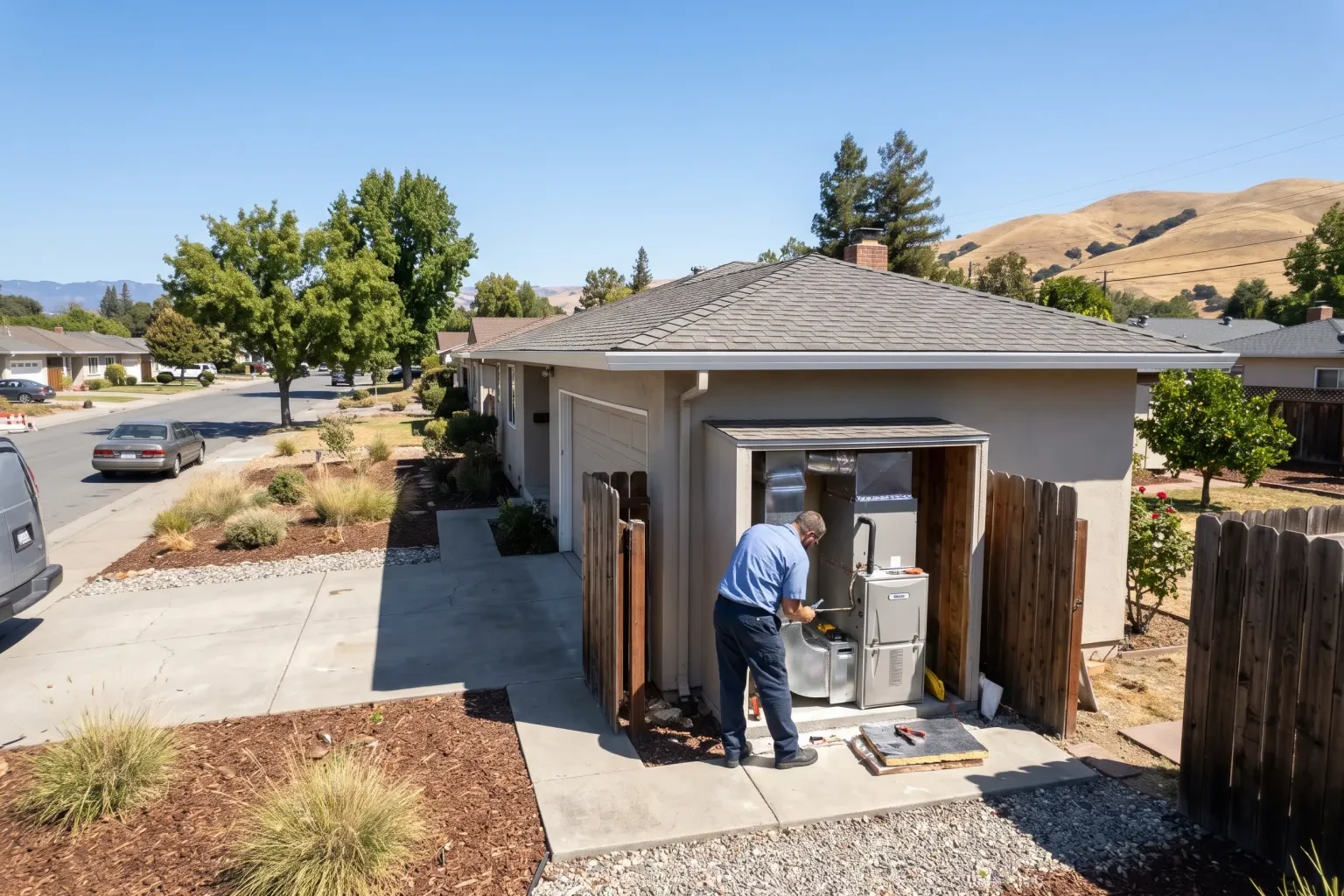
First, a technician comes to your home, inspects your current system, and asks how the house feels in each season: which rooms run cold, how loud the system is, and what matters most to you. We take measurements and look at your ducts, venting, and electrical setup.
Next, we explain what we found in plain terms and lay out your options, including repair if it makes sense. You get a written quote that spells out the equipment and the work involved, so you can compare choices without pressure.
On installation day, we protect floors and work areas, disconnect and remove the old unit, and install the new system along with any needed duct, vent, gas, or electrical work. Before we leave, we test startup, airflow, and safety controls, check for gas and carbon monoxide issues, and show you how to use the thermostat and when to change filters.