The short answer
Most homes don't need duct cleaning on a schedule, but it's worth doing when there's visible debris, pests, mold, or leftover construction dust in the system. We inspect first, then recommend cleaning, sealing, or replacing sections based on what we actually find.
Ducts carry all the air your heating and cooling system moves, so whatever is inside them can end up in your rooms. NextLevel AC Repair Service cleans and inspects ductwork for homeowners in San Jose and nearby cities, including Santa Clara, Campbell, Milpitas, Cupertino, and Los Gatos. Most homes don't need duct cleaning on a fixed schedule. It makes sense when there's a specific problem, such as heavy debris, pests, mold, or leftover construction dust. This page explains how to tell whether you need it, what we look at, and what happens during a visit.
Signs Your Ducts May Need Cleaning
Dust on furniture alone usually isn't a reason to clean ducts. Most household dust comes from people, pets, and outdoor air, and a well-fitted filter does more for everyday dust than duct cleaning does. The signs below point to a problem inside the ductwork itself.
In the Santa Clara Valley, long, dry summers pull more fine dust in from outside. This is especially true in the hotter inland and southern neighborhoods, where the AC runs hard. Mild, damp winters can cause condensation problems in ducts that run through crawlspaces or poorly insulated attics.
- Dust, lint, or debris blowing out of supply registers when the system starts
- Visible buildup inside the return grille or just past a supply register
- Signs of rodents or insects, such as droppings, nesting material, or a stale animal odor when the system runs
- Visible mold growth on duct surfaces, the blower, or the area around the evaporator coil
- Recent remodeling, drywall work, or floor sanding done without sealing off the vents
- A musty smell that's strongest right after the heat or AC turns on
- A newly purchased home where you don't know when the system was last serviced
What We Check During a Duct Inspection
We inspect before we recommend any cleaning. A technician looks at the parts of the system that affect air quality and airflow. We use a camera for sections we can't see directly, and we show you what we find.
Cleaning the ducts while ignoring the rest of the system rarely solves the problem. A dirty blower wheel or coil pushes debris right back into clean ducts, so we check them all together.
- Supply and return ducts, including the trunk lines and the branch runs we can reach
- The supply and return plenums near the furnace or air handler
- The blower wheel and motor compartment
- The evaporator coil and drain pan, checking for buildup, standing water, or growth
- Filter size, fit, and condition, and whether air is leaking around it
- Joints, seams, and connections, checking for leaks or separations
- Flexible duct, checking for crushing, kinks, sagging, or torn outer jackets
- Duct insulation in attics and crawlspaces
Cleaning, Repair, or Replacement
Not every duct problem calls for cleaning, and not every dirty duct needs to be replaced. Here's how we decide.
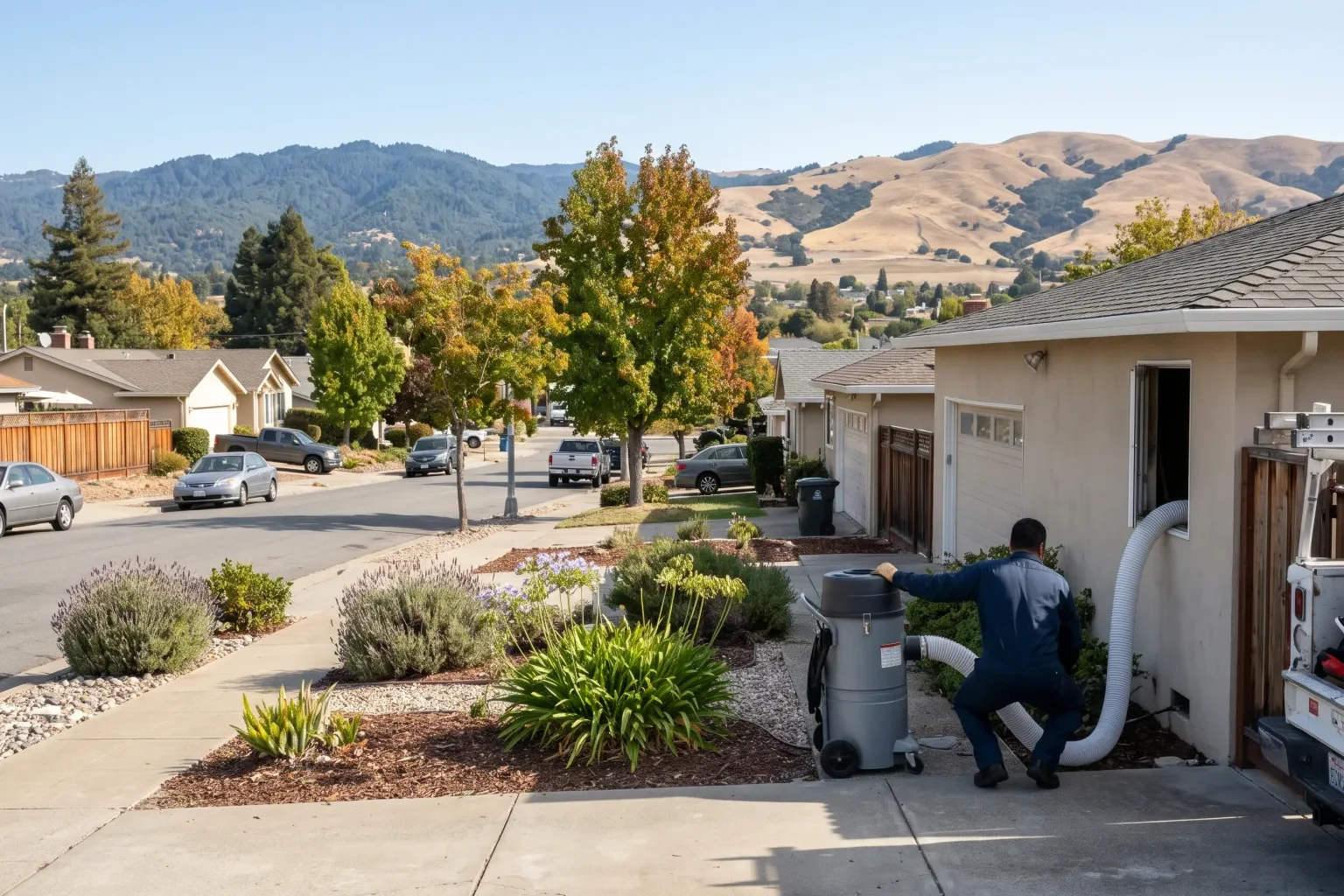
Cleaning is the right choice when the ductwork is in sound condition but contains debris, construction dust, or pest contamination that can be removed. We use negative-pressure vacuum equipment and agitation tools to loosen the material and pull it out of the system instead of into your home.
Repair is the right choice when ducts are leaking, disconnected, or damaged in a few spots. We can seal joints with mastic or approved foil tape, reconnect loose runs, re-hang sagging flex duct, and replace torn insulation. These fixes can improve airflow to rooms that never seem to get warm or cool enough.
Replacement makes more sense in a few situations: flex duct that is brittle or collapsed throughout, insulation that has broken down along long runs, mold in duct board or lined duct that can't be cleaned effectively, or a duct layout that was undersized from the start. If you're also thinking about replacing an older furnace, consider the ducts at the same time. Bay Area Air District rules don't require anyone to replace working equipment. However, gas furnaces made from 2029 on must meet a zero-NOx standard, which points many homeowners toward heat pumps when they replace a furnace. A heat pump may need different airflow, so we can tell you whether your current ducts are a good match.
What Affects the Cost
We give you a written quote after the inspection, because the scope depends on what we find. The main factors are listed below.
If something on the list isn't needed, we'll tell you. Leaving a dirty coil or blower can undo the work, but we won't add services that won't make a difference.
- The size of the home and the number of supply and return registers
- How many heating and cooling systems the home has
- Where the ducts run: an open attic is easier to work in than a tight crawlspace or ducts inside walls
- The type of duct: rigid metal, flex duct, and duct board each clean differently
- How much debris there is, and whether pests or mold are involved
- Whether the blower, coil, or drain pan also need cleaning
- Repairs such as sealing joints, reconnecting runs, or replacing sections
How a Visit Works
Most visits follow the same steps, from the first conversation to the final walkthrough.
Plan to have someone home so we can reach the attic, the crawlspace, and every room with a register. If anyone in the household has asthma or chemical sensitivities, tell us ahead of time. We don't apply sanitizers or coatings unless there's a specific reason and you agree to it.
- When you contact us, we ask what prompted the call: smells, debris, pests, remodeling, or uneven airflow
- A technician inspects the system and shows you photos or camera footage
- You get a written quote and decide whether to go ahead
- We protect floors and furniture, cover the registers, and connect the vacuum equipment to the duct system
- We clean the ducts branch by branch, then the plenums, then the blower and coil if they're included
- We replace the filter, check airflow, and walk you through what we did and anything else we noticed