
The short answer
If your home is dusty, stuffy, musty, or makes allergies worse indoors, your HVAC system and ductwork are a good place to start looking. A technician checks filtration, ducts, coils, humidity, ventilation, and gas appliance venting. Then they recommend repairs or upgrades that target the actual cause.
Indoor air quality is about what you breathe at home: dust, pollen, smoke, moisture, odors, and fumes from cooking and gas appliances. Your heating and cooling system moves the air in your house through every room many times a day, so it can either help clean that air or spread the problem around. NextLevel AC Repair Service helps homeowners in San Jose and nearby cities find out what is actually affecting their air and fix it at the source. That might mean a better filter, a cleaner system, sealed ductwork, better ventilation, or humidity control. We start by finding the cause, then recommend only what fits your home.
Signs Your Home Needs an Air Quality Check
The Santa Clara Valley has dry summers and mild, damp winters, and each season brings its own air problems. Summer means dust and pollen. Inland and southern parts of the valley run noticeably hotter than areas near the Bay, so the AC runs longer and windows stay shut. In winter, dampness can cause condensation on windows and musty smells in closets, bathrooms, and crawlspaces.
Watch for these common signs:
- Dust settles on furniture within a day or two of cleaning
- Allergy or asthma symptoms that are worse inside than outside
- Musty or stale smells when the heat or AC turns on
- Visible dust or dark streaks around supply vents
- Condensation on windows or mildew in bathrooms and closets
- Rooms that feel stuffy even when the temperature is right
- Cooking odors that linger for hours
- Smoky outdoor air that seems to stay inside long after it clears outside
- Headaches or drowsiness at home that improve when you leave
What We Check During a Visit
Air quality problems usually have more than one cause, so we look at the whole system rather than only the filter. We explain what we find as we go and show you photos of anything hidden in the attic, crawlspace, or equipment cabinet.
- Filter type, size, and fit, including gaps where air bypasses the filter
- Return and supply ductwork for leaks, disconnections, and damaged insulation, especially leaks that pull dust from attics and crawlspaces
- Evaporator coil and drain pan for buildup, standing water, and microbial growth
- Blower wheel and cabinet cleanliness
- Indoor humidity levels in different parts of the house
- Kitchen and bathroom exhaust fans, and whether they actually vent outdoors
- Gas furnace combustion, flue venting, and carbon monoxide safety
- Airflow and system pressure, which affect how well filters and air cleaners work
- Condition of any existing air cleaners, UV lights, or humidity equipment
Repair, Upgrade, or Replace: Your Options
Many air quality problems can be solved with targeted repairs. These include sealing leaky return ducts, cleaning a dirty coil or blower, clearing a clogged condensate drain, and fixing a filter slot that lets air slip around the filter. These fixes often make the biggest difference for the least disruption.
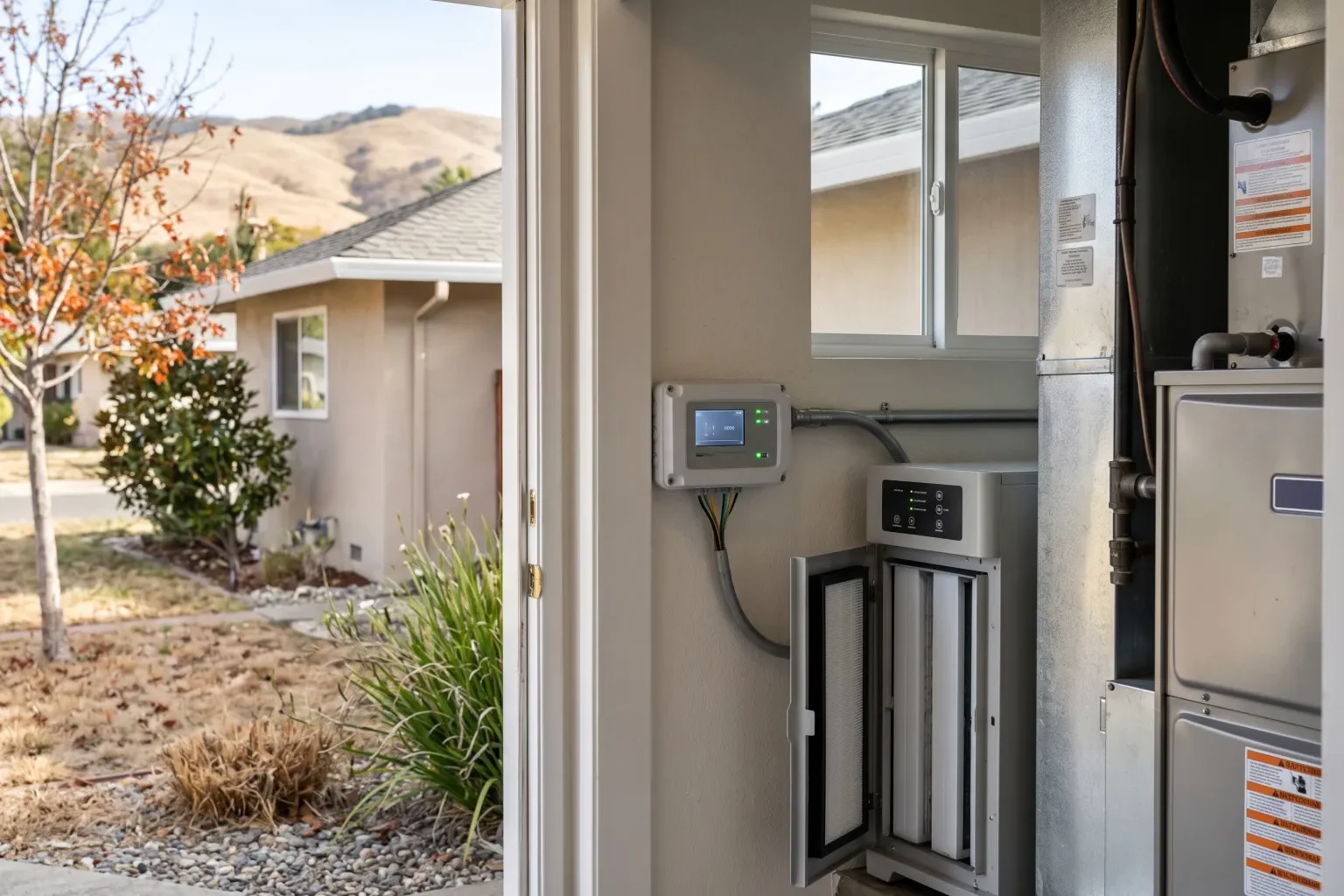
If repairs alone are not enough, we can talk through upgrades. Options include a deeper media filter cabinet, an electronic air cleaner, a UV light aimed at the coil, humidity control, or a balanced ventilation system that brings in filtered fresh air while exhausting stale air. We match the upgrade to the problem. We will not recommend a whole-house purifier for a problem that a sealed duct would fix.
Replacement makes sense when ductwork is badly deteriorated, when equipment cannot be cleaned or repaired well, or when an older furnace is near the end of its life. Bay Area Air District rules do not require you to replace working equipment. They apply only when a furnace or water heater fails or is replaced. Natural gas furnaces manufactured from 2029 must meet a zero-NOx standard, which in practice points homeowners toward heat pumps for replacements after that date. The federal 25C tax credit covered qualifying heat pumps placed in service before December 31, 2025, and is not available for new installations after that. You can check BayREN and your local clean energy provider for current incentives. Offers change by funding cycle, so we confirm what is available before including it in a quote.
What Affects the Cost
Every home is different, so we give you a written quote after the inspection rather than a guess over the phone. These are the main factors:
- Whether the fix is a repair, an added component, or new equipment
- How much ductwork needs sealing, repair, or replacement, and how easy it is to reach
- Attic and crawlspace access, including tight spaces and insulation in the way
- The type of filtration or air cleaning equipment you choose
- Whether new ventilation requires cutting in vents or running new ducts
- Electrical or drain work needed for added equipment
- Permits required by your city for certain installations
- Ongoing upkeep, such as filter changes or UV lamp replacement
How a Visit Works
First, we ask about what you are noticing: when it happens, which rooms are worst, and whether anyone in the house has allergies or breathing concerns. That helps us focus the inspection.
Next, the technician inspects your equipment, ductwork, and ventilation and takes readings where they are useful. They review the findings with you in plain terms and show you photos of what they saw.
Then you get clear options, usually starting with the simplest fixes that address the cause. If you choose to go ahead, many repairs can be done the same visit. Larger work is scheduled at a time that suits you. Afterward, we explain how to keep things working, including which filter to buy and how often to change it.